The Post-Genre Era: Why Gen Z is Tearing Down the Walls of Music Categories
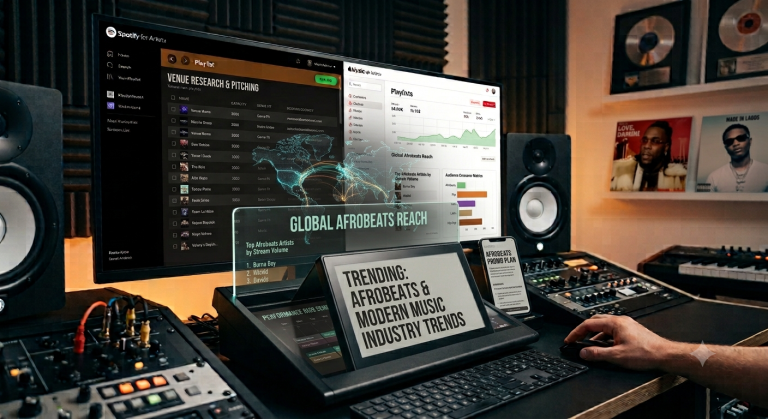
[Visual Prompt for Blog Image: An abstract, neon-lit digital collage blending a classical violin, an MPC drum pad, and vibrant Afrobeat geometric patterns.]
The traditional record store aisle is officially dead. For decades, the music industry relied on neat, rigid boxes to organize art: Rock went here, R&B went there, and Afrobeats lived in its own distinct corner. But if you glance at the playlists of today’s listeners, those walls haven’t just cracked—they’ve completely evaporated. We have officially entered the Post-Genre Era.
The Death of the Box
Modern listeners don’t subscribe to musical segregation. Driven by streaming algorithms that prioritize “mood” over “market,” younger fans are just as likely to transition seamlessly from a heavy trap beat to an acoustic folk ballad, followed immediately by an energetic Amapiano log drum.
Music is no longer a badge of subcultural identity; it’s an emotional soundtrack. Artists are no longer asking themselves, “Is this song R&B or Pop?” Instead, they are asking, “Does this convey the exact feeling I’m trying to capture?”
The Rise of “Nanogenres”
This absolute freedom has given birth to brilliant, hyper-specific sonic spaces often referred to as nanogenres. Consider these rising movements:
- PluggnB: A dreamy, ethereal blend of smooth 90s R&B vocal melodies laid over crisp, futuristic trap percussion.
- Afrofuturist-House: Deep, traditional African rhythms colliding head-on with heavy, industrial European club synths.
- Lo-Fi Alt-Goth: Melancholic, acoustic bedroom songwriting filtered through distorted, low-fidelity digital production.
What This Means for Independent Creators
For independent artists pushing the culture forward, this shift is the ultimate superpower. You no longer have to dilute your sound to fit a radio format. The internet has proved that the more authentic, chaotic, and unique your sonic blend is, the faster you will find a highly dedicated, global audience waiting for exactly what you’re creating.
About the Author